For physicians
Measure what happens between appointments.
Decide from data, not recall.
TrackDX is a symptom tracker that runs the statistics you and the patient need to manage their condition. Patients quickly log episodes, triggers, and medications. TrackDX leverages advanced statistical models and exports a Physician Summary for the visit — frequency over time, each medication's measured effect, efficacy of treatments, and trigger odds ratios. So you get data-driven insights instead of a shrug from the patient when you ask them how they are doing.
You get effects, not impressions.
A typical visit leaves about fifteen minutes to work out what changed since the last one. The Physician Summary puts that answer on paper before the conversation starts.
Each medication scored separately
Odds of an episode while on it, and its effect on severity — both adjusted for the patient's triggers. When a patient is on three preventatives, you can see which one is doing the work.
Triggers ranked and mutually adjusted
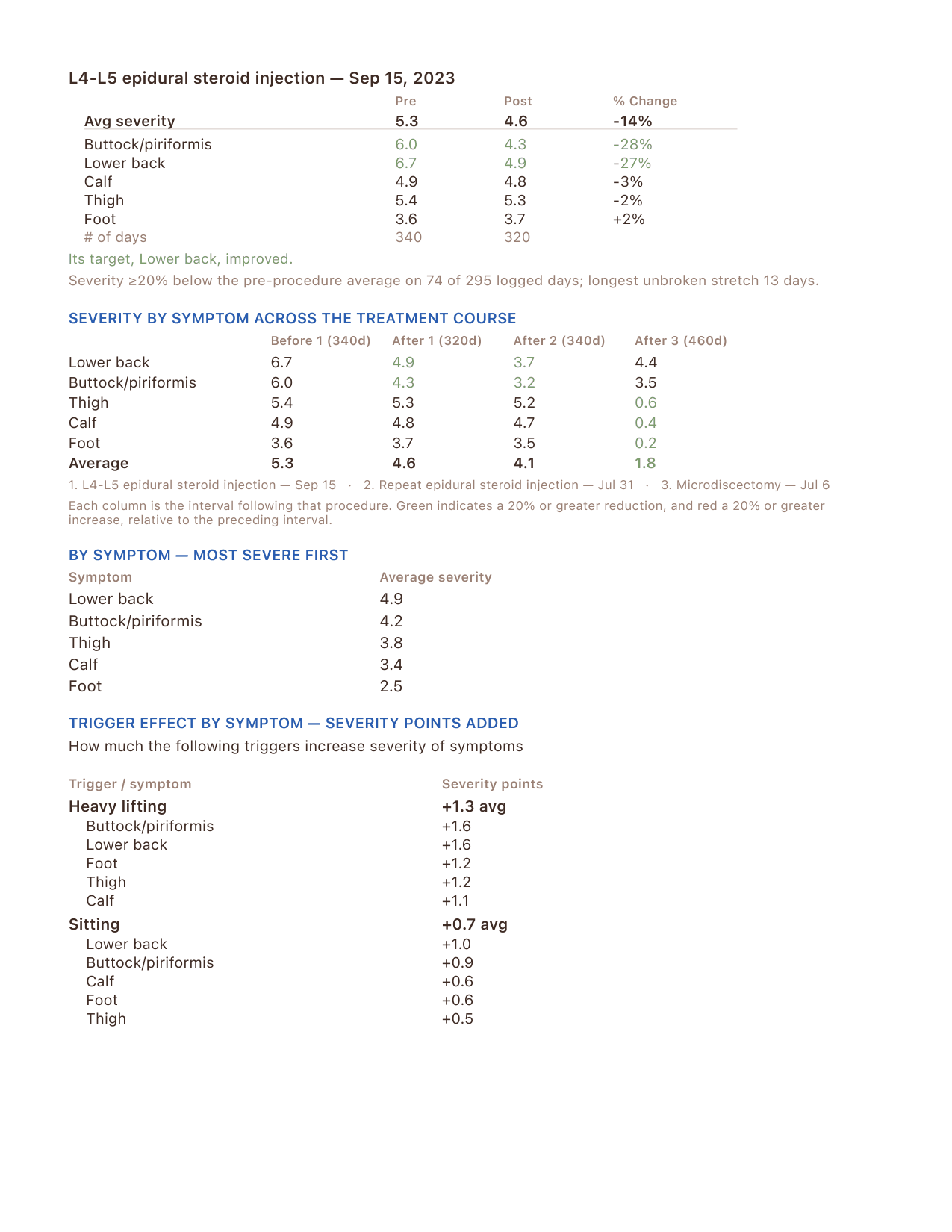
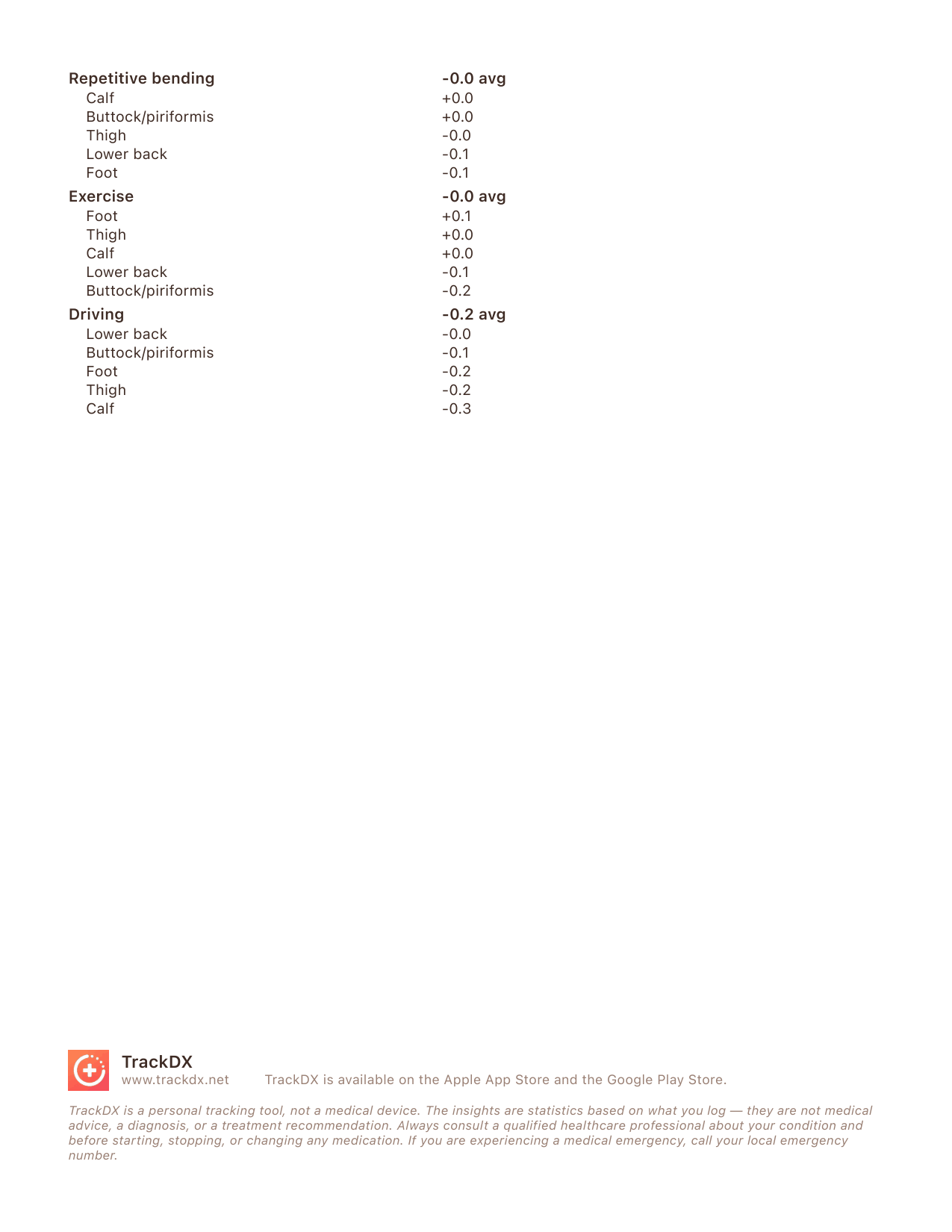
Adjusted odds let you see which trigger is most harmful — not just which one the patient noticed most recently.
Procedures measured before and after
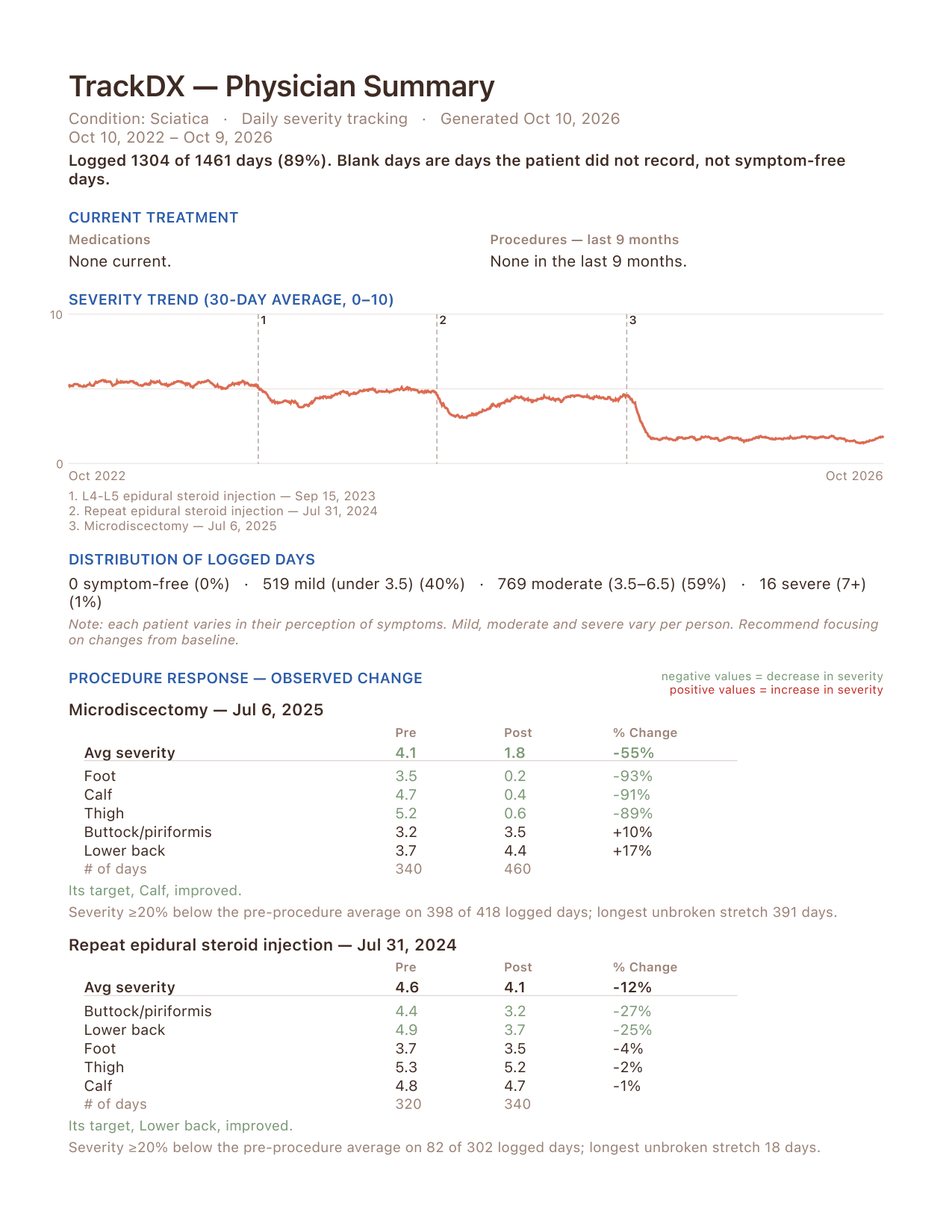
Pre and post severity, overall and by symptom, with how long the improvement lasted. You know whether it's working — and which symptoms it's helping most.
Frequency and severity over time
Episodes per 90-day period, the last 90 days against the 90 before, and a severity trend with each procedure marked on it.
Why patients actually keep it up
TrackDX allows for quick, consistent logging. Good data gets you good results.
About 20 seconds to log
One screen: date, time, duration, severity 1–10, the relief medication and whether it helped. Taps, not typing.
Quiet days count too
Patients quickly log triggers on non-episode days, allowing the models to discern the real triggers.
It fits the condition
Episodic tracking for attacks, or daily severity across up to six symptoms. Migraine, epilepsy, IBS, sciatica, eczema, fibromyalgia — TrackDX enables tracking and insights for almost any condition.
Prior authorizations, with the evidence already gathered
Payers often want the same things before they approve a newer medication, a repeat injection, or surgery: how often symptoms occur, how severe they are, which treatments were tried, for how long, and whether they worked. Step-therapy rules ask for documented trial and failure of the cheaper options first. Reconstructing that from memory at the visit is slow and easy to dispute. A patient who logs in TrackDX arrives with it already measured.
Treatment history, dated
Every preventative with the days the patient was on it, current medications with start dates, and procedures with their dates — the treatment course in one place.
Response measured, not recalled
Each medication's effect on episode odds and severity while the patient was on it — so a medication that didn't help is documented as not helping, over a stated number of days.
Frequency over a defined period
Episodes per 90-day period and the last 90 days against the previous 90 for episodic conditions; for daily ones, the count of mild, moderate and severe days and how many days were logged.
Whether relief lasted
For each procedure: average severity before and after, the change for every symptom, and how many logged days stayed at least 20% below the pre-procedure average — useful when a payer asks whether a prior injection gave lasting relief.
Criteria differ between payers and plans. The Physician Summary is patient-reported data to support your clinical documentation, not a replacement for it.
Nothing to set up on your side
No portal to log into, no integration, no account. The patient generates the summary on their phone in seconds and hands it to you — as a PDF, printed, or on the screen.
Private by design
Everything the patient logs stays on their device — nothing is uploaded to a server, sold, or shared. The summary reaches you only because they chose to hand it over.
Try it with one patient
Three steps, one appointment cycle.
- Point them to trackdx.net or either app store. TrackDX is on the App Store and Google Play.
- Ask them to log for 30 days. The first 30 days are free with everything unlocked. After that, a one-time $1.99 — no subscription and no account.
- Have them bring the summary to the next visit. Patients with existing records can import them from a spreadsheet, so they don't start from zero.


Questions? We'd love to chat — contact@trackdx.net
Example Physician Summaries
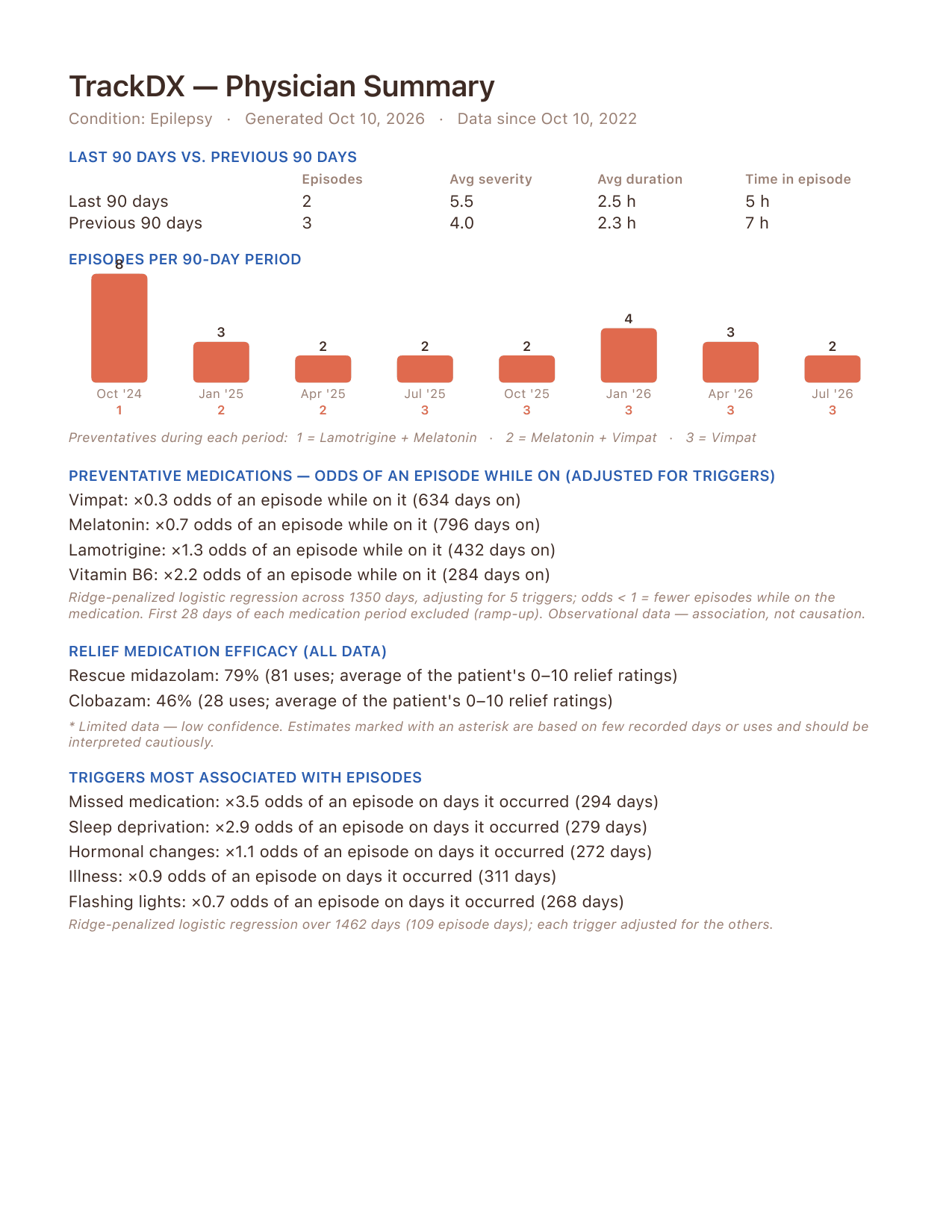
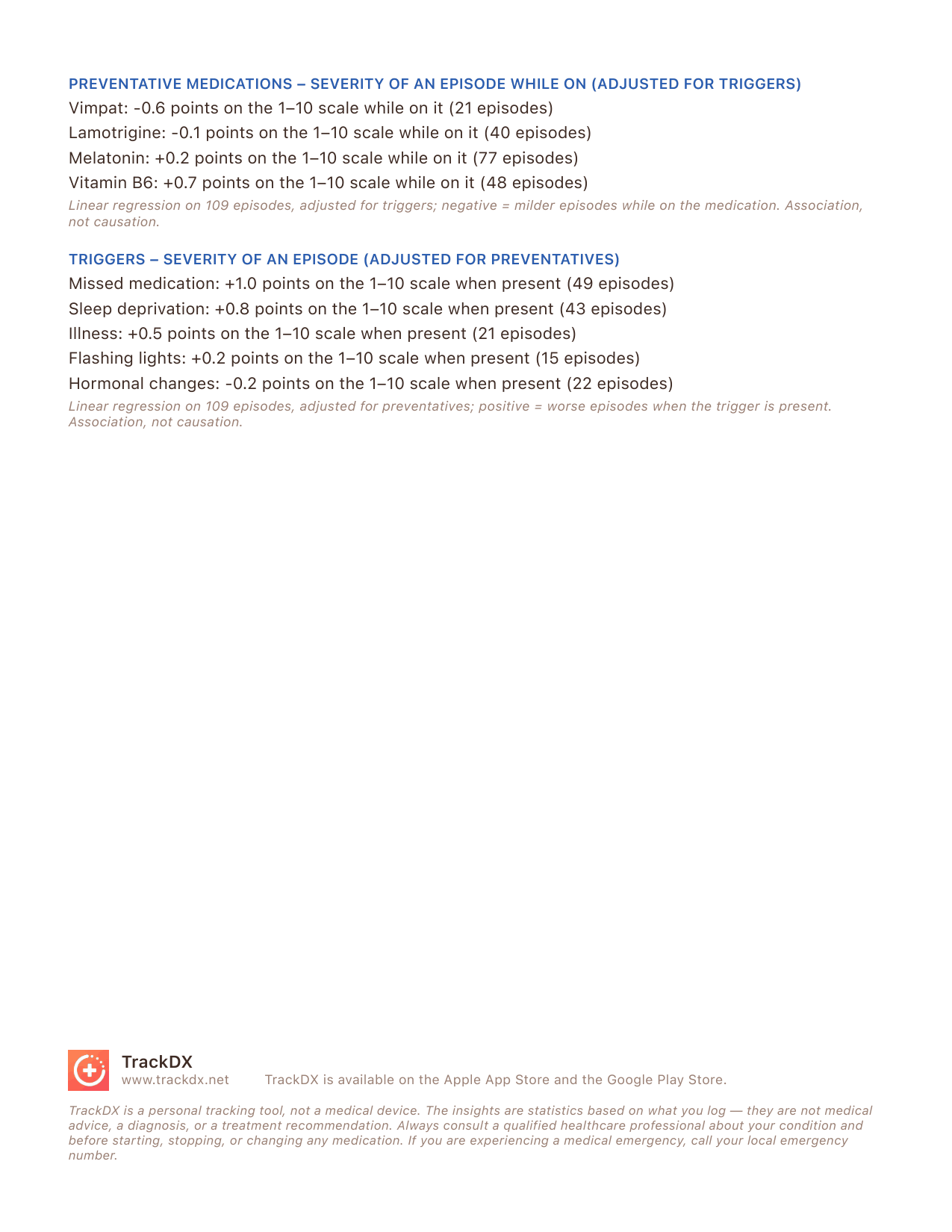
Association, not causation.
TrackDX is a personal tracking tool, not a medical device or diagnostic tool. Its output is descriptive statistics computed from what the patient logged — association, not causation — and is not medical advice, a diagnosis, or a treatment recommendation.